Social class (or simply "class"), as in a class society, is a set of concepts in the social sciences and political theory centered on models of social stratification in which people are grouped into a set of hierarchical social categories,the most common being the upper, middle, and lower classes. (Wikipedia) Status- relative social or professional position; standing.
synonyms:
standing, rank, ranking, position, social position, station, level, footing, place;
Editing and Representation
Editing is primarily related to narrative, so how does match-on action have anything to do with character or representation? The role of editing in representation is open to interpretation and is greatly dependent on context.
Action Match
When following a single character, this is a purely technical device to hide the cut. However, when an action match is used for intercutting, such as between two very different people, it can heighten parallels/ contrasts between two characters, offering an opportunity for juxtaposition
Eyeline Match
Eyeline match usually provides insight to a character's private thoughts
We see Leia looking at the stormtroopers and the stormtroopers noticing Leia
Final Shot
In any scene, see which character or characters are shown in the final shot of the sequence as this is often the character which the audience is expected to identify with
Intercutting: Juxtaposition
Although typically a narrative device, intercutting can set up juxtaposition between parallel storylines, exaggerating the impact or meaning by highlighting a point of difference
Intercutting: Tension
When intercutting is used to draw two storylines together, this can be structured to create tension, and therefore heighten the audience's identification with a particular character
See 1:51- 2:40. We cut between the tiger's pursuit of Cutter and Abby's running with the rifle in action code and prompts the question: will she get there in time?
Jump Cuts
There are rarely used in TV or film; when they are, they tend to suggest either a)chaos, b)self-conscious ellipsis (drawing attention to the rapid pace of the action) or c) a director who likes to break the rules
SEE CLIP ABOVE
When Cutter prepares to slide down the zip-wire, we see jump cuts which could show both his hesitation and his speediness and decisiveness to zip wire down the line
Motivation
A motivated edit is any transition forced on the editor by the development of the action, narrative or character. Whenever shot (a) refers to the existence of an event outside the frame, and we then cut to (b) which shows that event, that’s a motivated edit. We can sometimes judge a character’s worth or importance by the number of cuts they motivate.
e.g. in Primeval, Cutter runs away from the tiger, drawing it away from Abby.
His constant motion motivates many of the cuts in this sequence, again reinforcing his status as the protagonist, if not the Proppian hero.
Pace of Editing
This can imply character qualities, especially if only one or two characters are in the sequence. A fast pace might suggest energy or panic (depending on context) while infrequent cuts (long takes) might suggest calm, a casual attitude, or provide documentary-style realism. Similar effects can be achieved with speed ramping and slow-motion.
Prevalence
How much screen time does a character get? The more time we see them on the screen, the more important their role. This can develop during a scene to change character's status.
Selection
As film-makers yourselves, it can sometimes be interesting to ask what information has been included or omitted in an edit.
Shot/Reverse Shots
S/RS indicates the relationship between two characters: it signifies and sometimes exaggerates their closeness or their opposition (depending on the context). The amount of time given to a character’s reaction shots can convey their status in the scene. For example, if two characters are in S/RS conversation, do they get equal screen time, or do we spend more time looking at one character, speaking and reacting? Equally (though this is also a function of camera, are the two characters framed equally?
Reaction Shots
Assistant Principle Examiner Comments
One approach to both sound and editing is to look at the way in which technical elements are used to create perspective or viewpoint within a sequence - a key element of the process of representation that goes beyond the identification of 'character traits'.
By understanding, for example, how screen time, p.o.v. or reaction shots are distributed, even weaker students can see how hierarchies are established, leading to certain representations being privileged where others are marginalised.
Stronger students are able to develop this further by discussing how the audience is positioned in relation to the representations on offer - the best answers in the June session of G322 offered some great discussion of the way in which editing frequently shifted the viewer's relationship to dominant views of gender in different scenes.
Another important factor is the way that the editing of the sequence grants or witholds narrative information from the audience in order to encourage identification or rejection of particular characters/representations. Fans of 1970s screen theory will recognise the essence of Colin McCabe's work on hierarchy of discourses in classic realist texts in this approach - obviously massively watered down! There are good chapters on this in Television Culture (John Fiske) and Television Studies (Bernadette Casey) if you want to mug up.
(With some weird cutting thing at the end which removed focus related clips- see below for vocabulary). Thanks to Sarah for helping me film it). Deep Focus- a technique using a large depth of field. In deep focus the foreground, middle ground and background are all in focus
Shallow Focus- in shallow focus, one plane of the image is in focus while the rest is out of focus. It is typically used to emphasise one thing over another
Focus Pulls- this is where you change focus during the shot
Mise-en-Scène (Light and Colour Design)
Light designers will be on a set to help with the lighting of shots and the decisions to do with colour. Although coloured lights are more often used in theatre, they may be used in film. When working with colour, this will also be the decision of whether to make a shot light, dark or greyscale, as well as many other colours, all to create meaning.
Mise-en-Scène (Production Design) Location- a place where some or all of a film or television series is produced, in addition to or instead of using sets constructed on a movie studiobacklot or soundstage Studio- a major entertainment company or motion picture company that has its own privately owned studio facility or facilities that are used to make films, which is handled by the production company. Studio premises generally feature multiple sound stages along with an outside backlot, as well as offices for studio executives and production companies. There is normally a studio "commissary", which is the traditional term in the film industry for what other industries call a company cafeteria Set design- the creation of film or television scenery Costume- a set of clothes in a style typical of a particular country or historical period Make-up- cosmetics such as lipstick or powder applied to the face, used to enhance or alter the appearance. In a film or TV company, this may also be the use of prosthetics etc. to change the face completely but this will also link in to the VFX department Properties- aproperty, commonly shortened to prop (plural: props), is an object used on stage or on screen by actors during a performance or screen production. In practical terms, a prop is considered to be anything movable or portable on a stage or a set, distinct from the actors, scenery, costumes and electrical equipment. Consumable food items appearing in the production are also considered properties
Soundtrack Soundtrack- music accompanying a TV show or film. Not necessarily written for the film itself. Score- original music written specifically to accompany a film. Usually instrumental but sometimes has singers (for example, the Bond title track "The Writing's On The Wall" was written specifically for Spectre) Incidental Music- music in a play, television program, radio program, video game, film, or some other presentation form that is not primarily musical. The term is less frequently applied to film music, with such music being referred to instead as the "film score" or "soundtrack". Incidental music is often "background" music, and is intended to add atmosphere to the action Themes- a musical cue that will represent the film from then on
Stings- short bursts of music used in radio or TV shows to bump together different sections or chapters Ambient Sound- background noise such as people talking
Sound (Part 1) Diegetic Sound- sound whose source is visible on the screen or whose source is implied to be present by the action of the film:
voices of characters
sounds made by objects in the story
music represented as coming from instruments or the radio etc. in the story space ( = source music)
Non-diegetic Sound- sound whose source is neither visible on the screen nor has been implied to be present in the action:
narrator's commentary
sound effects which is added for the dramatic effect
mood music
Synchronous Sound- sound that is matched to certain movements that are occurring in the scene e.g. when footsteps correspond to feet walking Asynchronous Sound- sounds match the action happening on the scene, however it is not precisely synchronised Sound Effects- a sound other than speech or music made artificially for use in a play, film, or other broadcast production (for example, the wilhelm scream) Sound Motif- a sound that has symbolic significance and contributes toward the development of theme. It will usually be a sound associated with a character or place.
Sound Bridge- when the scene begins with the carry-over sound from the previous scene before the new sound begins Dialogue- speech between characters Voiceover- speech that is non-diegetic and an be heard over the action Mode of Address- ways in which relations between adressers and addressees are demonstrated through sound. The manner in which the narrative comes across to the audience. This includes the style of language Direct Address- this is also known as breaking the fourth wall, or breaking verisimilitude (the appearance of a film being true or real), when an actor will speak directly to the audience Sound Mixing- the process during the post-production stage of a film or a television program in which the collection of recorded sounds are combined into one or more channels along with adjusting the many attributes of the sounds such as the source signals’ level Sound Perspective- a sound’s position in space as perceived by the viewer given by volume, timbre, and pitch
Dissolve- a gradual transition from one shot to another. Not the same as a fade in or fade out
Fade in- a gradual transition from a blank screen to an image/ shot
Fade out- a gradual transition from an image/shot to a blank screen, usually black or white in colour
Wipe- A wipe is a type of film transition where one shot replaces another by travelling from one side of the frame to another or with a special shape. If the wipe proceeds from two opposite edges of the screen toward the center or vice versa, it is known as a barn door wipe (named for its similarity to a pair of doors opening or closing). There are lots of different types of wipe including: iris slow, star wipe, heart wipe, matrix wipe and many more
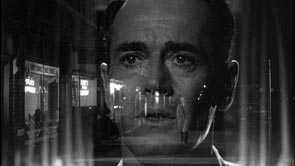
Superimposition- the placement of an image or video on top of an already-existing image or video, usually to add to the overall image effect, but also sometimes to conceal something (such as when a different face is superimposed over the original face in a photograph)
Long take- uninterrupted shot in a film which lasts much longer than the conventional editing pace either of the film itself or of films in general, usually lasting several minutes. Long takes are often accomplished through the use of a dolly shot or Steadicam shot
Short take- scenes that are no more than five seconds long are considered a short take
Fast motion- action that appears to move faster than normal on the screen, accomplished by filming the action at less than normal speed in the camera and then projecting it at normal speed
Ellipsis- the omission of a section of the story that is either obvious enough for the public to fill in or concealed for a narrative purpose, such as suspense or mystery
Expansion of time-you are making the duration of the video sequence longer than real-time. Some example of how to do this are slow motion and many different angles, all showing the same thing
Post-production- Post-production is many different processes grouped under one name. These typically include:
Video editing the picture of a television program using an edit decision list (EDL)
Writing, (re)recording, and editing the soundtrack.
Adding visual special effects - mainly computer-generated imagery (CGI) and digital copy from which release prints will be made (although this may be made obsolete by digital-cinema technologies).
Sound design, Sound effects, ADR, Foley and Music, culminating in a process known as sound re-recording or mixing with professional audio equipment.
Transfer of Color motion picture film to Video or DPX with a telecine and color grading (correction) in a color suite
Visual effects- the processes by which imagery is created and/or manipulated outside the context of a live action shot. Visual effects involve the integration of live-action footage and computer generated imagery to create environments which look realistic, but would be dangerous, expensive, impractical, or simply impossible to capture on film
Editing via Cutting Continuity- the predominant style of film editing and video editing in the post-production process of filmmaking of narrative films and television programs. The purpose of continuity editing is to smooth over the inherent discontinuity of the editing process and to establish a logical coherence between shots Non-continuity- when shots are mismatched to disrupt linear time and space. This will often confuse or disturb the illusion of ‘reality’ on the screen by drawing attention to the process of cutting Shot/reverse shot- one character is shown looking at another character (often off-screen), and then the other character is shown looking back at the first character. Since the characters are shown facing in opposite directions, the viewer assumes that they are looking at each other Eyeline match- the eyeline match begins with a character looking at something off-screen, followed by a cut to the object or person at which he is looking. For example, a shot showing a man looking off-screen to the left is followed by a shot of the television that he is watching
Graphic match- is a cut in film editing between either two different objects, two different spaces, or two different compositions in which objects in the two shots graphically match, often helping to establish a strong continuity of action and linking the two shots metaphorically Action match- the editor cuts from one shot to another view that matches the first shot's action.
A common example is a man walking up to a door and reaching for the knob. Just as his hand touches the knob the scene cuts to a shot of the door opening from the other side.
Jump cut- two different camera angles, or shots, of the same subject edited together. The subject is not in the same position as in the previous shot, so they appear to have jumped. This can disrupt linear time, as it will appear like there is a period of time missing between the two shots Crosscutting/ Parallel Editing- cutting between various shots of action in different settings/locations, creating the effect that they are happening at the same time. This is often used to create suspense Cutaway- the interruption of a continuously filmed action by inserting a view of something else. It is usually, although not always, followed by a cut back to the first shot, when the cutaway avoids a jump cut
Insert- a shot of part of a scene as filmed from a different angle and/or focal length from the master shot. Inserts cover action already covered in the master shot, but emphasize a different aspect of that action due to the different framing
Camera Composition Framing- the presentation of visual elements in an image, especially the placement of the subject in relation to other objects
Rule of Thirds-The rule divides the frame into nine sections. Points or lines of interest should occur at 1/3 or 2/3 of the way up or across the frame, rather than in the centre
Depth of Field-the amount of distance between the nearest and farthest objects that appear in acceptably sharp focus in a photograph Deep Focus- a technique using a large depth of field. In deep focus the foreground, middle ground and background are all in focus
Shallow Focus- in shallow focus, one plane of the image is in focus while the rest is out of focus. It is typically used to emphasise one thing over another
Focus Pulls- this is where you change focus during the shot
Pan- refers to the rotation of a camera horizontally (left and right) when it is on a vertical axis (a stand)
Tilt- refers to the rotation of a camera vertically (up and down)
Tracking shot/ Dolly shot- a shot in which the camera is mounted on a camera dolly, a wheeled platform that is pushed on rails while the picture is being taken; in this case the shot is also known as a dolly shot or trucking shot. The term may also refer to any shot in which the camera follows a subject within the frame, such as a moving actor or a moving vehicle. When using the term tracking shot in this sense, the camera may be moved in ways not involving a camera dolly, such as via a Steadicam, via handheld camera operator, or by being panned on a tripod
Crane-a shot taken by a camera on a crane or jib
Hand-held- a camera is held in the camera operator's hands as opposed to being mounted on a tripod or other base. They are often shakier than other shots because someone is holding the camera (THINK BLAIR WITCH)
Zoom- zooming in
Reverse zoom- zooming out Steadicam- a brand of camera stabilizer mount for motion picture cameras that mechanically isolates it from the operator's movement. It allows for a smooth shot, even when moving quickly over an uneven surface.
Camera Angles High Angle- the camera looks down on the subject from a high angle
Low Angle- the subject looks up from the subject from a low angle
Canted Angle/ Dutch Angle- a camera shot where the camera is set at an angle so that the shot is composed with vertical lines at an angle to the side of the frame
Establishing Shot- A shot that establishes a scene, often giving the viewer information about where the scene is set. Can be a close up shot (of a sign etc.) but is often a wide/ long shot and usually appears at the beginning of a scene
Master Shot- Film recording of an entire dramatised scene, from start to finish, from an angle that keeps all the players in view. Often a long shot and can sometimes double as an establishing shot
Aerial Shot- A camera shot taken from an overhead position. Often used as an establishing shot
Extreme Close Up- A shot where a part of a face or body of a character fills the whole frame/ dominates the whole frame. Also can be a shot of and object where only a small part of it dominates the frame
Big Close Up- Usually a face shot, so we can see expressions. Most likely used as a reaction shot
Close Up- A head and shoulders shot often used to show expressions/ emotions of a character. Also can be a shot of an object, filmed from close to the object or zoomed in to it, that reveals detail
Medium Shot/ Mid-shot- The framing of a subject from waist up
Medium Long Shot- Halfway between a Medium Shot and a Long Shot
Long Shot AKA Wide Shot- The subject takes up the full frame, as much as is comfortably possible
Very Long Shot AKA Very Wide Shot- The subject is visible but the emphasis is still putting him in the environment
Extreme Long Shot AKA Extreme Wide Shot- The subject is barely visible and it is the setting that is important
Two Shot- A shot of two characters, possibly engaging in conversation. Usually to signify/establish some sort of relationship
Point-Of-View Shot (POV)- Shows a view from the subject's perspective. This shot is usually edited so that the viewer is aware who's point of view it is
Over The Shoulder Shot- Looking from behind a character's shoulder, at a subject. The character facing the subject usually occupies 1/3 of the frame but it depends on what meaning the director wants to create (for example, if the subject is an inferior character the character facing them may take up more of the the frame to emphasise this)
Overhead Shot- A type of camera shot in which the camera is positioned above the character, action or object being filmed
Reaction Shot- A shot that shows the reaction of a character either to another character or an event within the sequence
Noddy Shot- Usually refers to the interviewer listening and reacting to the subject (nodding along)
Moving subject walks into space- A subject walks into a space
Semiotics Semiotics- the study of signs and sign systems; the social production of meaning by sign systems, how things come to have significance and meaning Symbol-an arbitrary sign in which the signifier has neither a direct nor an indexical relationship to the signified, but rather represents it through conventions Signifier- any symbol, image or word that can be read (basically anything)
There are three types of signifier
Iconic- these signifiers always resemble what they signify- they're always used to signify something
Indexical- these signifiers act as evidence- smoke means fire, sweat is proof of effort, ambulance means someones been hurt
Symbolic- these are visual signs that are arbitrarily linked to referents- crowns are now used to refer to monarchs, they are a symbol of the monarchy
Signified- the particular meaning or meanings of the signifier in a particular context or situation Denotation- signs signify or ‘denote’
different aspects of our experience of the world. They are the work of that
part of the sign (the signifier) which
is immediately recognisable to the reader and which has a direct relationship
to a real world entity or referent. It refers to something literal, as opposed to metaphorical. The
colour red for example we know as a colour in the light spectrum, different
from blue or pink Connotation- these are the meanings interpreted from a sign which link other values to it. For example, the colour red brings up notions of love, blood, anger, danger, stop signs, heat etc. Polysemic- literally ‘many signed’- an image in which there are several possible meanings depending on the ways in which its constituent signs are read Index-measures a quality not because it is identical to it but has an inherent relationship to it Icon-A sign in which the signifier represents the signified mainly by its similarity to it, its likeness Binary
oppositions-
sets of opposite values said to reveal the structure of media texts. These
define through their opposite and chose a lesser and greater position.For example, man/woman; weak/strong; black/white; civilised/savage; good/evil etc Conventions
-‘un-written
rules’ in
the production of mainstream texts.Conventions are the dominant codings in
any media Anchoring-
written text used to control or select a specific reading of an image Mode of address- How a text ‘speaks’ to its audience. How the audience is positioned in relation to the text Metonymy-literally ‘substitue naming’a figure of speech in which an associated detail or notion is used to invoke an idea or represent on object. For example, the phrase "the pen is mightier than the sword" uses metonymy as it is using the pen as a representation of the power of written word and the sword as a representation of war Synecdoche-The idea that ‘part’ of a person, an object, a machine, etc, can be used to represent the ‘whole’, and work as an emotive or suggestive shorthand for the viewer, who invests the ‘part’ with symbolic associations. For example, in Othello, he is referred to as "thick lips" as a racist term. Thick lips is used to describe the whole of him Mise en scene-
literally ‘putting
together the scene’;
how we read the actions of the creative personnel in a film crew who visualise.
Everything on screen